
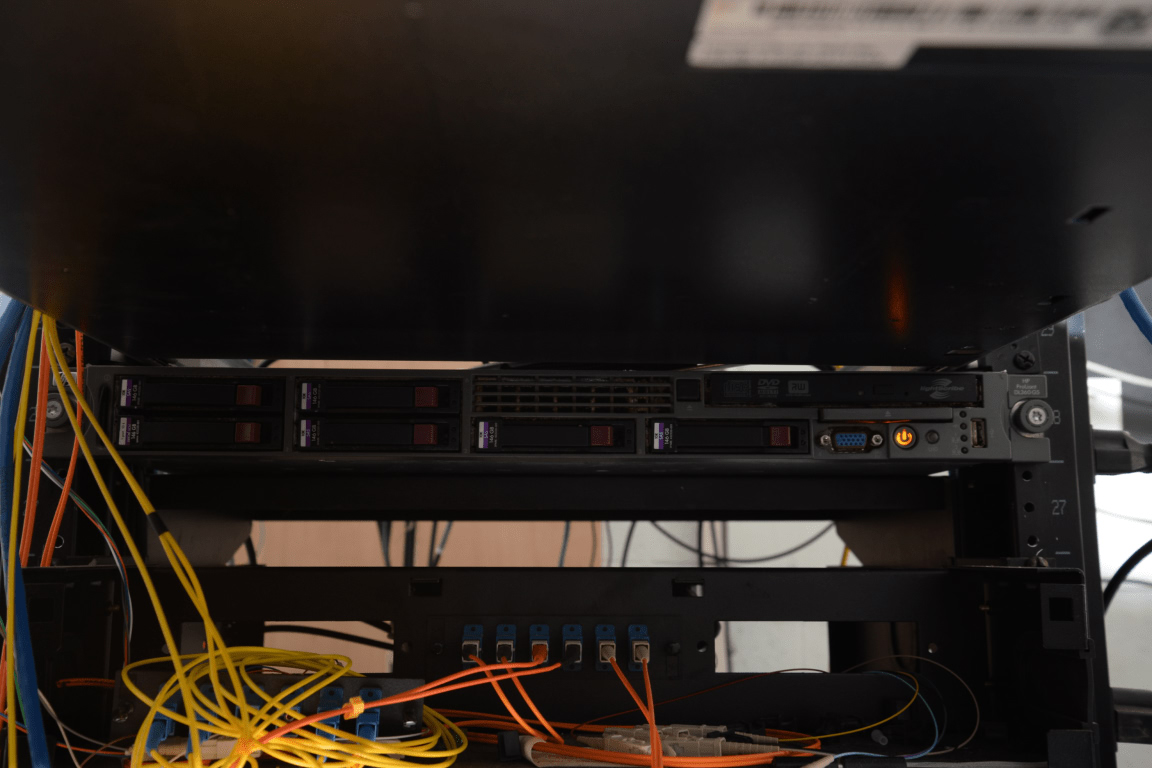
For the first phase of the generative AI boom, enterprise technology leaders accepted a predictable financial reality: accessing frontier intelligence required subscribing to closed, metered proprietary APIs with token billing rates that grew exponentially alongside company adoption. Today, a fierce open-weight counter-revolution is upending that dynamic.
Through architectural masterstrokes in sparse Mixture-of-Experts (MoE) modeling—spearheaded by releases like DeepSeek-V3/V4 and Nvidia's open model initiatives—combined with hardware optimization for Nvidia Blackwell architectures, businesses are migrating high-throughput production workloads onto dedicated, self-hosted infrastructure at up to a 90% reduction in total cost of ownership (TCO).
The Architectural Secret: Sparse MoE & Multi-Head Latent Attention
Dense neural networks activate every parameter for every single generated token. In contrast, DeepSeek architectures employ an ultra-fine-grained Mixture-of-Experts design where only a tiny subset of expert sub-networks (e.g., 37 billion active parameters out of 671 billion total parameters) fire for any individual token.
This efficiency is amplified by Multi-Head Latent Attention (MLA), documented in DeepSeek's technical whitepapers, which compresses the Key-Value (KV) cache memory footprint by up to 80%. As a direct result:
- KV Cache Memory Compression: High concurrency serving instances can sustain 10x more parallel requests per GPU node without running into Out-Of-Memory (OOM) exceptions.
- FP8 and FP4 Low-Precision Quantization: Blackwell's second-generation Transformer Engine processes native 4-bit floating point math with negligible benchmark perplexity degradation.
- Zero Vendor Lock-In: Weights can be hosted inside private VPCs or on bare-metal racks under full enterprise data compliance boundaries.
Cost Breakdown: Proprietary API vs. Self-Hosted Blackwell Cluster
Consider an enterprise processing 100 million tokens daily across customer service, code analysis, and document parsing:
| Deployment Model | Monthly Ingestion Cost | Latency (Time to First Token) | Data Privacy Guarantee |
|---|---|---|---|
| Frontier Closed API | $18,000 – $32,000 / mo | 450ms – 1,200ms (Internet round-trip) | Shared multi-tenant cloud |
| Self-Hosted DeepSeek-V4 (GB200 Node) | $2,400 – $3,800 / mo (Amortized HW + Power) | 45ms – 90ms (Local InfiniBand fabric) | 100% On-Premise Air-Gapped |
Nvidia Blackwell & TensorRT-LLM Integration
Hardware optimization is the second half of the cost-slashing equation. Nvidia's GB200 NVL72 connects 72 GPUs into a single massive unified GPU memory space using 1.8 TB/s bidirectional NVLink switches.
When running through specialized compilation runtimes like TensorRT-LLM and vLLM with PagedAttention, token generation speeds surpass 140 tokens/second per stream. High-load operations like automated batch regression testing and continuous documentation generation that once cost thousands of dollars per month now complete for pocket change.
Strategic Takeaway for Developers & Startups
The commoditization of frontier intelligence means that raw model capability is no longer an insurmountable moat. The true competitive advantage belongs to software builders who construct superior agentic scaffolding, proprietary contextual knowledge bases, and hyper-responsive user interfaces on top of lean, cost-efficient open infrastructure.
Primary Technical Reports & Verified Whitepapers
The architecture benchmarks, memory footprints, and compute telemetry in this analysis are sourced directly from primary open publications and hardware documentation: