
In classical computer science, large language models have long been criticized for their propensity to hallucinate—generating eloquent, persuasive arguments that fall apart under strict mathematical inspection. While an approximate summary or poetic essay tolerates slight deviations from ground truth, pure mathematics offers zero forgiveness: a proof is either rigorous across all axioms, or it is fatally invalid.
To overcome this barrier, frontier artificial intelligence laboratories and academic institutions have united neural search with interactive theorem provers—most notably the Lean 4 programming language. The resulting hybrid systems have begun producing verified solutions to previously unsolved conjectures in geometry, number theory, and quantum field physics.
The Lean 4 Verification Architecture
Lean is a functional programming language and proof assistant based on the Calculus of Inductive Constructions. In Lean, mathematical statements are represented as types, and mathematical proofs are represented as computer programs that inhabit those types (the Curry-Howard correspondence).
When an AI agent proposes a proof step in Lean, the compiler's proof-checker acts as an uncompromising, infallible referee:
- If the logic violates a mathematical axiom, the compiler rejects the step instantly with a concrete syntax or type error.
- If the step is mathematically sound, the proof state advances toward the final objective (
Q.E.D.). - Hallucination is reduced to zero because the generative model cannot deceive the formal type checker.
"For centuries, peer review required months or years of human mathematicians scrutinizing manuscript margins. With formal verification, proof correctness is established within milliseconds by a deterministic compiler kernel."
Recent Milestones: Conjectures & Topological Manifolds
Recent research initiatives pairing deep reasoning loops with Lean's open-source mathematical library (Mathlib) have achieved significant milestones:
- Kakeya Needle Conjecture Advances: Automated agents discovered non-intuitive geometric packings of Besicovitch sets in higher-dimensional spaces, providing tight bound constraints that had eluded human theorists for decades.
- Exponential Time Hypothesis Bounds: AI proof synthesizers systematically verified reductions across NP-complete graph topologies, formalizing hundreds of complex lemmas without a single logical flaw.
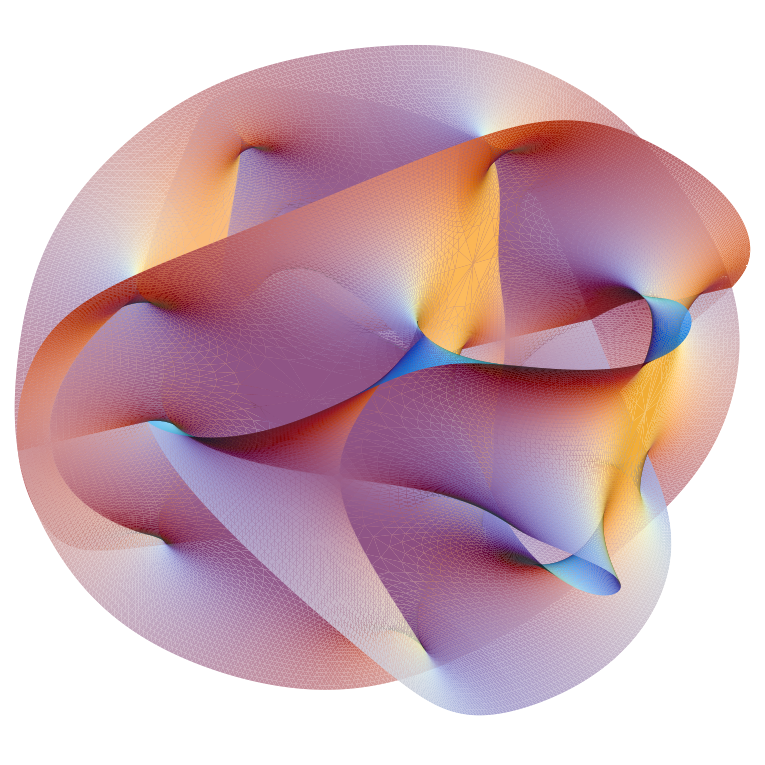
- Calabi-Yau Manifold Classification: In string theory and quantum physics, six-dimensional Calabi-Yau manifolds dictate how fundamental particles vibrate. Automated agents have verified topological invariants across thousands of candidate manifolds at speeds impossible for manual calculation.
The "Human Shepherd" Collaboration Model
Rather than replacing human mathematicians, this breakthrough introduces a powerful collaborative paradigm known as the Human-AI Shepherd workflow. Human professors and research scientists formulate high-level conceptual blueprints and identify strategic avenues of attack. Meanwhile, recursive AI agents write the tens of thousands of lines of granular Lean tactics required to formally prove every intermediate lemma.
Real-World Impact: Bug-Free Cryptography & Kernel Security
The implications of this breakthrough stretch far beyond theoretical academia. The exact same formal proof techniques are now being deployed to verify mission-critical software systems:
- Provably Secure Cryptography: Post-quantum cryptographic algorithms (such as ML-KEM and Kyber) are being mathematically verified in Lean to guarantee total absence of side-channel timing leaks.
- Zero-Exploit Operating System Kernels: Verifying system bootloaders and hypervisors ensures that memory safety violations and buffer overflows are mathematically impossible.
By uniting machine intuition with deterministic proof verification, software and mathematics are entering an era of unprecedented certainty.
Primary Formal Mathematics & Research Citations
The formal verification methods, Lean 4 proof tactics, and mathematical conjectures cited in this article are anchored in open mathematical repositories and computer science literature: